
Bag shapes and the measurements that matter for each
Every bag is measured in the same three directions, but each shape puts its limits in a different one. These are the figures to read first for each kind of bag in the catalogue.
Backpacks: height and depth before width
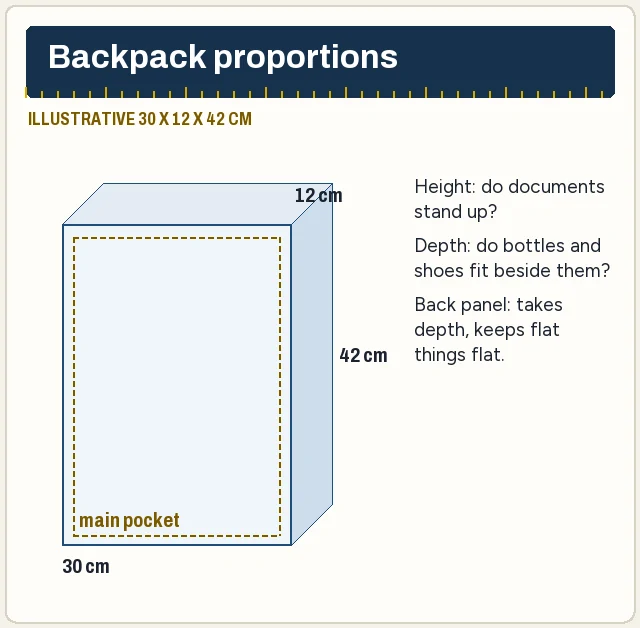
A backpack carries its load against your back, so its shape is set by a person's torso: tall, fairly narrow, and as thin as the maker can manage. For packing, height decides whether long flat things such as an A4 wallet or a laptop stand up inside, and depth decides whether anything round goes in beside them. Width matters less, because most backpacks are wide enough for paper already.
Listings for backpacks usually give a size such as 30 by 12 by 42 and a litre figure. Look for a separate back pocket or panel in the photos; it takes depth from the main compartment but keeps flat items from sliding. A roll-top adds height that the listed size may or may not include, so look for a photo with the top unrolled.
Browse the backpack shelf with your reference load in mind: shoes and bottles want depth, documents want height, clothes are flexible.
Totes: a wide opening over a narrow base
A tote is the opposite shape: wide, open at the top, and often much narrower at the base than at the mouth. Sellers usually give the width across the top, the height, and a base depth, sometimes called the bottom width 底宽. The base depth is the one that tells you whether a lunch box or a pair of shoes can sit flat on the floor of the bag.
Because a tote is open, nothing stops a soft load from rising above the rim, which is why tote capacities look generous on paper. For travel the same openness is a weakness: there is nothing to compress the load, so a full tote is about as deep as its contents, and that depth is what the airline frame sees.
Plain canvas totes appear in the catalogue under searches such as canvas tote bag. When the listing gives only two figures, it has usually left out the base depth, and a photo from the side is worth more than the size line.
Crossbody, shoulder and belt bags: small litres, exact edges
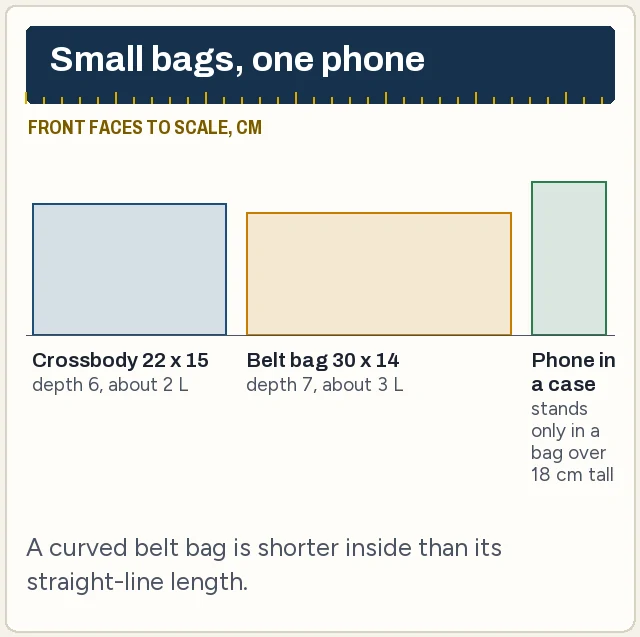
Small bags are measured in single litres or less, and at that size a centimetre is a large share of the room. A crossbody bag of 22 by 6 by 15 centimetres is about two litres as a box; a belt bag of 30 by 7 by 14 is about three. The question is not how much they hold in general but whether your particular phone, wallet and keys go in.
Phones are the usual deciding item. A large phone in a case can be 17 or 18 centimetres tall and 8 or 9 wide, so a bag with an inside height of 15 will carry it only lying down. Curved belt bags lose length along the curve; the listed length is measured straight across and the usable inside is shorter.
The catalogue has separate shelves for shoulder bags and belt bags. For both, look for an inside photo with the seller's own phone or a ruler in it.
Duffels and travel bags: length and the soft sides
Duffels and holdalls are long bags, and their listed length is the number to compare with airline frames: a 55 centimetre duffel is at the limit of most cabin frames before you account for end pockets or handles. Their height and depth are the same measurement taken two ways, because a soft cylinder squashes into whatever space it is given.
That softness is useful under a seat and in an overhead locker, but it also means the listed height and depth describe a bag stuffed for the photo. Packed lightly it is flatter; packed heavily it is rounder and may exceed a 20 or 23 centimetre depth limit.
Shoe compartments at one end, common on gym duffels, are worth noticing for your reference load: they take a pair of trainers out of the main space but also fix part of the bag's shape. The catalogue groups these under travel bags.
Expansion zips and side gussets
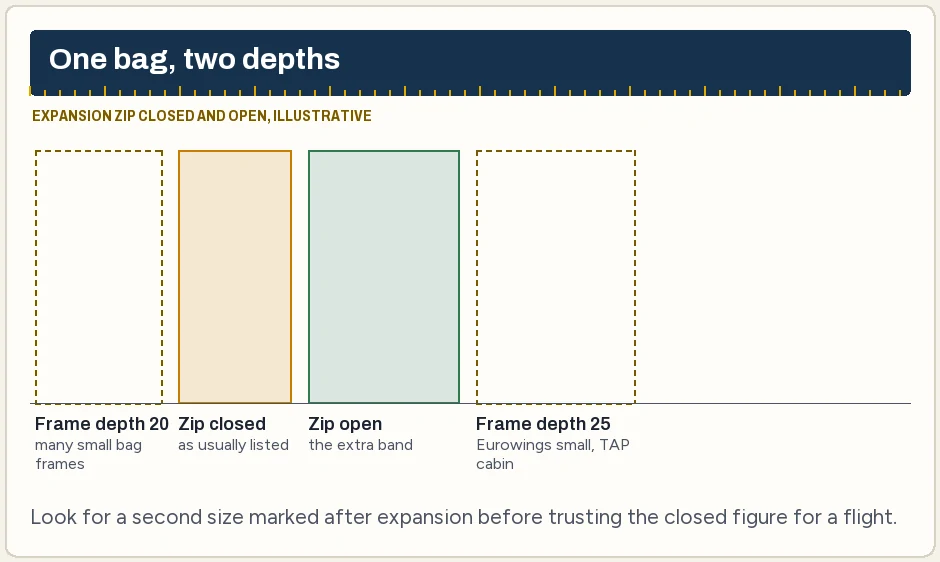
An expansion zip runs round the middle of a bag and opens a band of extra fabric, usually a few centimetres deep. A side gusset does a similar job without a zip: pleated panels at the ends that let the bag widen as it fills. Both are ways of selling one bag as two sizes.
Listings handle this inconsistently. Some give the closed size only and add 可扩容 (expandable). Some give both sizes with 扩容后 (after expansion) before the larger figure. A few quote the expanded litre figure next to the closed dimensions, which is how a bag ends up described as both a slim commuter and a weekend bag.
For packing, the expanded size is real room you can use. For airline frames, assume the gate will see the bag expanded if it is full enough to need the extra depth. A bag that fits a 20 centimetre frame closed and measures 24 open is a 20 centimetre bag only on the days you can keep it closed.
Compression straps work the other way: they let a part-full bag shrink back towards its listed depth. A bag with straps on both sides is easier to get into a shallow frame than one without, at the same listed size.
If a listing shows the bag only closed and the description mentions expansion without numbers, message the seller through your agent and ask for the expanded depth. The answer is one measurement and saves guessing.
Images: catalogue photographs are category examples, not this site’s purchases or verified Mulebuy orders. Drawn material, dimension and lettering examples explain a concept; they do not certify the depicted product.